What Causes Commercial Roof Leaks?
A commercial roof leak rarely starts as a dramatic event. More often, it begins as a small weakness: a seam that starts to separate, a flashing detail that loosens over time, a drain that cannot move water fast enough, or a rooftop unit that creates a vulnerable penetration point. By the time water appears inside the building, the real problem may have been developing for weeks, months, or even years.
That is one reason commercial roof leaks can be so frustrating. The visible stain on a ceiling tile or drip in a hallway is only the symptom. The actual entry point for water may be several feet away, hidden beneath membrane layers, insulation, flashing, or rooftop equipment. For building owners and facility managers, understanding what causes commercial roof leaks is the first step toward preventing them, minimizing disruption, and protecting the life of the roof system.
Below, we will break down the most common causes of commercial roof leaks, why they happen, and what building owners can do to reduce the risk.
Why commercial roofs leak
Commercial roofs are exposed to constant stress. Sun, rain, wind, hail, freeze-thaw cycles, foot traffic, and mechanical equipment all affect roof performance. Unlike many steep-slope residential roofs, commercial roofs are often low-slope systems designed to manage water slowly and methodically through drains, scuppers, gutters, and carefully sealed details.
When one part of that system fails, water can find a path inside.
In many cases, leaks are not caused by one single catastrophic defect. Instead, they develop from a combination of age, deferred maintenance, weather exposure, and small installation or service-related issues that worsen over time.
1. Damaged or failing roof membrane
The roof membrane is the primary waterproofing layer on many commercial roof systems. If that membrane is punctured, cracked, split, or deteriorated, water can enter the assembly.
Common membrane problems include:
- Punctures from dropped tools or sharp debris
- Tears caused by foot traffic or moving equipment
- Seam failure in aging membrane systems
- Shrinkage that places stress on edges and flashings
- Surface deterioration from UV exposure and weathering
Single-ply roofs such as TPO, PVC, and EPDM depend on continuous membrane performance. Even a small defect can allow moisture infiltration, especially if it occurs in an area where water ponds or where the membrane is under repeated stress.
In some situations, the membrane itself is not the only issue. Water may enter through a failed seam or open lap and then travel laterally within the system before showing up indoors. That makes leak detection more complicated and underscores why prompt inspection matters.
2. Failed flashing details
Flashing is one of the most common sources of commercial roof leaks. In simple terms, flashing helps seal transitions and terminations where the roof meets walls, curbs, penetrations, and edges. These are naturally vulnerable areas because the roofing system has to change direction or tie into another building component.
Leak-prone flashing areas often include:
- HVAC curbs
- Pipe penetrations
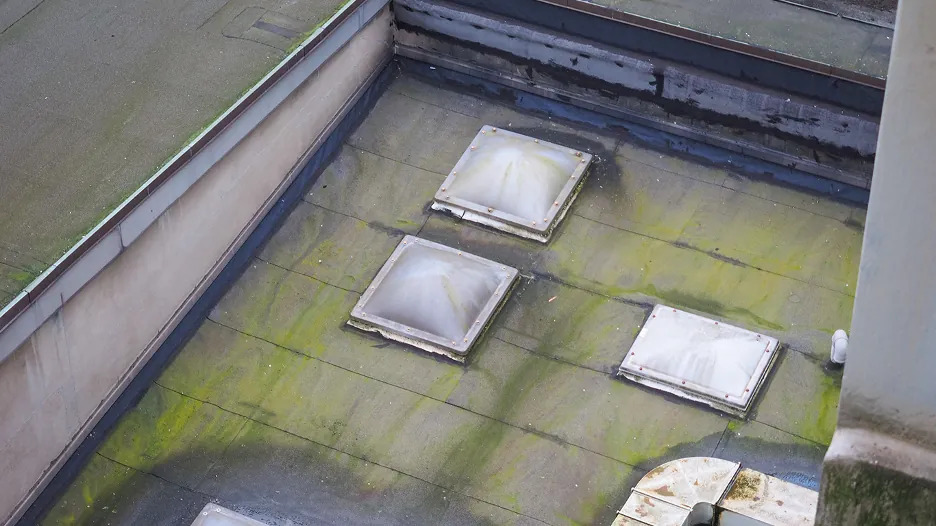
- Skylights
- Wall transitions
- Expansion joints
- Roof edges and parapet walls
When flashing is poorly installed, improperly sealed, damaged, or simply worn out, water can work its way behind the roofing system. On older roofs, flashing may dry out, crack, pull away, or lose adhesion. On newer roofs, improper detailing during installation can create an early failure point.
This is one of the reasons commercial roofing is not just about the field membrane. The details matter. In many leak investigations, the primary membrane is still in decent condition, but a failed flashing component is allowing water inside.
3. Clogged drains, gutters, and scuppers
Commercial roofs are designed to direct water off the roof in a controlled way. When drains, gutters, or scuppers become clogged with leaves, debris, sediment, or even roofing materials, drainage slows down or stops altogether. That leads to ponding water.
Ponding water increases the likelihood of leaks because it places prolonged stress on seams, flashings, and low areas of the roof. Water that stays on a roof longer has more opportunity to exploit weak points. It can also accelerate material deterioration over time.
Drainage issues are especially common after storms, during fall leaf season, and on buildings where routine roof maintenance has been neglected. Even a high-quality roof system can struggle if water has nowhere to go.
If your building has a low-slope roof, drainage is not optional. It is a core part of leak prevention.
4. Rooftop penetrations and equipment issues
Commercial roofs often support a variety of mechanical systems and penetrations, including HVAC units, exhaust fans, vents, conduit, solar components, and communication equipment. Every penetration creates a potential leak point because the waterproofing system must be interrupted and carefully sealed.
Problems often occur when:
- A new unit is added without proper roofing coordination
- Service technicians damage the roof while accessing equipment
- Curbs or pitch pans deteriorate over time
- Sealants around penetrations fail
- Multiple trades work on the roof without understanding roofing requirements
This is a major issue on many commercial buildings. Roofing systems can be damaged by well-intentioned non-roofing contractors who install or service equipment but do not repair or protect the roof correctly afterward.
For example, an HVAC contractor may open a penetration, move a unit, or leave behind traffic damage. The leak may not appear until the next heavy rain, but the root cause traces back to rooftop work that compromised the system.
5. Storm damage and extreme weather
Severe weather is another common cause of commercial roof leaks. Wind, hail, heavy rain, snow, and rapid temperature changes can all contribute to roof failure.
Wind can lift membrane edges, loosen flashing, and drive rain into vulnerable details. Hail can bruise membranes, damage seams, fracture flashing materials, and weaken roof accessories. Heavy rain can overwhelm drainage systems if they are undersized, obstructed, or already compromised. Freeze-thaw cycles can enlarge small cracks and create recurring problems in flashing and sealant joints.
What makes weather-related leaks challenging is that storm damage is not always obvious from the ground. A roof may look fine from below while still having hidden membrane damage, displaced components, or compromised details.
After a major storm, it is wise to have the roof inspected even if no leak is immediately visible. Some forms of damage do not become apparent until later.
6. Poor installation or workmanship issues
Not every commercial roof leak is the result of age or weather. Some leaks begin with installation defects.
A roof system is only as good as the quality of its installation. If seams are improperly welded, flashing details are not completed correctly, insulation is uneven, or drainage design is flawed, the roof may begin experiencing issues much earlier than expected.
Common workmanship-related causes of leaks include:
- Incomplete seams
- Poor flashing attachment
- Improper termination details
- Fastener problems
- Inadequate slope design
- Incorrect material transitions
These issues may show up soon after installation, but sometimes they stay hidden until the roof is tested by weather or seasonal expansion and contraction.
That is why contractor selection matters. Commercial roofing is a detail-driven trade, and long-term performance depends heavily on proper design, installation, and quality control.
7. Aging roof systems
Even well-installed roofs do not last forever. As commercial roof systems age, materials naturally become more vulnerable to leaks.
You may see:
- Brittle membranes
- Worn seams
- Loose flashing
- Deteriorated sealants
- Surface erosion
- Loss of flexibility in critical details
An aging roof does not always need immediate replacement, but it does require closer monitoring. Small deficiencies that might have been minor on a newer roof can lead to bigger moisture issues on an older one.
Many leaks happen because a building owner assumes the roof still has more service life left than it actually does. Without regular inspections and condition assessments, it is easy to miss the warning signs.
Aging also increases the odds that multiple minor issues are present at the same time. One open seam, one clogged drain, and one failed curb detail may not seem like major problems individually, but together they create a much higher leak risk.
8. Lack of routine maintenance
One of the biggest contributors to commercial roof leaks is simple neglect.
Commercial roofs should be inspected and maintained regularly, yet many are only addressed after a leak disrupts operations. By then, what could have been a small repair may have become a larger problem involving insulation, decking, interior finishes, inventory, or tenant space.
Routine maintenance often includes:
- Clearing drains and gutters
- Removing debris
- Checking seams and flashings
- Inspecting penetrations
- Looking for punctures or open details
- Evaluating signs of ponding water
- Documenting changes in roof condition
Maintenance is not just about preserving appearance. It helps identify developing issues before they turn into active leaks. It also helps extend roof life and improve budget planning by catching repair needs early.
In commercial roofing, deferred maintenance is often expensive maintenance.
9. Foot traffic and accidental damage
Many commercial roofs receive more foot traffic than building owners realize. Maintenance personnel, HVAC technicians, electricians, solar installers, and other contractors may all access the roof throughout the year.
Without proper walk pads, access control, and coordination, repeated traffic can damage the membrane. Tools can be dropped. Sharp objects can puncture the roof. Equipment can be dragged across vulnerable areas. Even routine service visits can shorten roof life if the system is not protected.
Accidental damage is especially common around rooftop equipment where technicians kneel, carry materials, or stage tools. Over time, these high-traffic zones become common leak locations.
A roof is not just a platform for equipment. It is a weatherproofing system, and it needs to be treated that way by every trade that steps onto it.
10. Hidden moisture and delayed leak symptoms
One of the most confusing parts of commercial roof leaks is that water rarely travels in a straight line. Once moisture enters the roof system, it can move through insulation layers, along decking, around fasteners, or down structural elements before becoming visible inside.
That means:
- The interior leak location may not match the roof entry point
- Water damage may continue even after rainfall stops
- Multiple wet areas may trace back to one rooftop defect
- The problem may be larger than it first appears
This is why leak investigations should focus on root cause, not just visible symptoms. Patching the obvious wet area without identifying how water entered the assembly can lead to recurring leaks and ongoing damage.
How to reduce the risk of commercial roof leaks
While no roof is immune to problems, many leaks are preventable. A proactive approach can make a major difference.
Best practices include:
- Schedule regular roof inspections
- Address repairs promptly
- Keep drains and drainage paths clear
- Limit and manage rooftop traffic
- Coordinate all rooftop trades carefully
- Inspect the roof after major weather events
- Maintain documentation on repairs, service history, and roof condition
The goal is not simply to react faster when a leak happens. The goal is to reduce the chances of that leak happening in the first place.
When a leak appears, act quickly
A small leak can create big problems if ignored. Water intrusion can damage insulation, decking, ceilings, walls, equipment, and inventory. It can also interrupt operations, affect tenants, and lead to mold or indoor air quality concerns if moisture remains trapped.
If you notice signs of a commercial roof leak, it is important to respond quickly. Common warning signs include interior stains, drips, musty odors, wet insulation, bubbling in the membrane, standing water, or recurring leaks during rain events.
The sooner the issue is investigated, the better the chance of limiting damage and identifying a targeted repair.
Final thoughts
So, what causes commercial roof leaks? In most cases, the answer is not just one thing. Leaks are usually the result of stress at vulnerable points: failed flashing, membrane damage, clogged drains, rooftop penetrations, storm impacts, aging materials, poor workmanship, or lack of maintenance.
The good news is that many of these issues can be found and corrected before they lead to major interior damage. Commercial roofs tend to give warning signs, but those signs are easy to miss without consistent inspections and a proactive maintenance plan.
For building owners and facility managers, the smartest approach is to treat the roof as a managed asset, not an afterthought. When the system is inspected regularly, serviced correctly, and protected from unnecessary damage, it has a much better chance of performing the way it should.
Safety, Service, & Quality — every day since 1981.
Louisville: (502) 459-2216
Hebron: (859) 943-0012
Service: (888) 818-4842