Metal Retrofit — Does Your Roof need a Repair or Replacement?
When a metal roof starts leaking, many owners assume there are only two choices — keep patching or rip everything off and start over. Both options sound painful. One keeps draining your maintenance budget with call after call; the other feels like a major project that disrupts your schedule and ties up cash.
There is a third path that often makes far more sense for commercial and industrial buildings — a properly designed metal retrofit.
In this blog, we will break down what a metal retrofit is, when it works, what it costs you in disruption (not just dollars), and how Commonwealth Roofing Corp. (CRC) can save your existing metal roof instead of replacing it outright.
What is a metal retrofit, really?
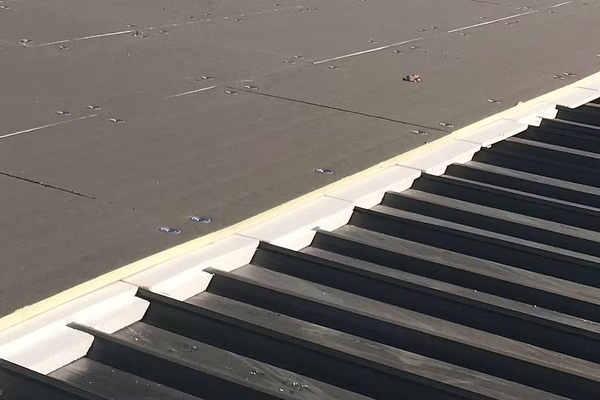
In simple terms, a metal retrofit takes the metal roof you already have and turns it into the structural “deck” for a new, watertight roof system.
Most commercial retrofits work like this:
- The ribs or “flutes” between the metal panels are filled with insulation (often EPS flute fill).
- A second layer of insulation or a cover board is installed over the top, creating a flat, solid surface.
- A new single-ply membrane — usually TPO or PVC — is mechanically attached or induction welded over that surface, with new flashings, edges and details.
Instead of tearing off every panel, hauling it to a landfill and exposing your building to the weather, you keep the existing metal in place and build a new, code-compliant roof assembly on top. Many designs rely on the metal roof to support the new insulation and membrane while meeting modern wind, snow and live load requirements.
Why do metal roofs fail in the first place?
Metal roofs are popular for good reasons — long spans, durable finishes and decades of service when maintained. But over time, certain problems tend to show up:
- Fastener back-out. Screws work loose under thermal movement and wind, opening paths for water.
- Lap and seam leaks. Horizontal or end laps lose sealant or separate slightly, letting water in.
- Aging sealants and gaskets. UV, movement and time break down factory gaskets and field sealants.
- Movement at penetrations. Pipes, curbs and equipment support shifts over the years, stressing flashings.
- Limited insulation. Older metal roofs were often built with minimal insulation, driving energy bills higher than necessary.
By the time you see recurring leaks or rust at seams, the roof may still have solid structural bones — it just is not performing as an exterior waterproofing system anymore. That is where a retrofit shines.
Metal retrofit vs. full replacement — key differences
1. Less disruption to your business
With a retrofit, most or all of the existing metal stays in place. There is no full tear-off, so crews are not exposing your building’s interior across large areas at once. That means:
- Less risk of weather getting inside.
- Fewer open-roof days over sensitive equipment or inventory.
- Reduced noise and dust compared with ripping panels off.
Industry case studies consistently note that keeping the existing roof in place significantly reduces interior disruption versus full replacement.
For busy plants, distribution centers or dealerships, that alone can be reason enough to evaluate retrofit first.
2. Lower labor and disposal burden
Full replacement of a metal roof requires:
- Removing every panel and fastener.
- Staging and craning new panels or deck.
- Hauling and disposing of the old metal and insulation.
A retrofit keeps most of that material in place. There is still careful work to do — adding sub-framing where needed, installing flute fill, fastening new insulation and membrane — but you avoid the heavy tear-off and hauling that drive labor and disposal costs.
Several roofing and metal building experts point out that this is why retrofits are generally more cost-effective than complete replacement on many metal buildings.
3. A chance to dramatically improve insulation
Most older metal roofs were not built with today’s energy standards in mind. A retrofit is the perfect moment to upgrade R-value by:
- Filling the flutes with EPS or similar insulation.
- Adding a continuous layer of board insulation or cover board above.
This “flute fill plus board” approach turns a corrugated surface into a flat, insulated platform and can meaningfully reduce heat loss and heat gain through the roof.
Lower energy use and a more comfortable building are long-term benefits your finance and operations teams both appreciate.
4. Strong wind and code performance when engineered correctly
Because the existing metal is thinner than a typical steel deck, attachment design is critical. Leading manufacturers emphasize:
- Proper fastening patterns into purlins or structural members.
- Additional sub-framing or hats where needed.
- Tested assemblies that meet current wind uplift and snow load requirements for your area.
When a retrofit is engineered and installed correctly, you can end up with a roof that performs better under wind and snow than the original system.
When is a metal retrofit a good fit?
Retrofit is not a magic answer for every building, but it is a powerful tool when certain conditions are met.
A metal roof is often a strong candidate when:
- The panels are weathered, but structurally sound — no widespread structural failure or severe corrosion at purlins.
- Leaks are frequent at fasteners, laps or penetrations, and patching is no longer keeping up.
- The building needs better energy performance, but you want to avoid the disruption of a full tear-off.
- You want to upgrade to a single-ply system (TPO or PVC) with modern flashings, walkway pads and manufacturer warranty options.
- Operations cannot afford long shut-downs or open-roof conditions.
Retrofits may not be appropriate when:
- Structural members or purlins are badly deteriorated.
- There is extensive impact damage or deformation of the roof system.
- The existing roof cannot safely support the added weight of insulation and a new roof assembly (your engineer and CRC can determine this).
In those cases, CRC will be upfront — full replacement or structural work comes first.
How Commonwealth Roofing Corp. (CRC) designs a metal retrofit
Because every building is different, CRC treats metal retrofit as a custom solution built on a standard process.
Step 1: Detailed inspection and documentation
CRC begins on the roof and inside the building, not on a proposal template. We:
- Map leak locations and recurring problem areas.
- Assess panel condition, fasteners, laps and flashings.
- Check drainage paths and any evidence of ponding or back-ups.
- Look for signs of structural movement or corrosion.
- Document everything with photos and notes.
From there, we confirm whether a retrofit is the right pathway — or if repairs, coatings, a different system or full replacement make more sense. (CRC does not install or service Modified Bitumen; we focus on systems where we deliver the best long-term value.)
Step 2: Roof design that fits your building
If retrofit is a good fit, CRC works with leading manufacturers to design an assembly that matches your exposure and goals. That typically includes:
- Flute fill insulation sized to your metal panel profile.
- Continuous insulation or cover board above for a flat surface and added R-value.
- A single-ply membrane — often TPO or PVC — chosen based on your environment (clean, typical exposure vs. food, grease or other chemicals).
- Attachment patterns and sub-framing engineered for wind and snow loads in your region.
- Walkway pads and details at high-traffic or service areas.
- Edge metals, terminations and flashings designed to manufacturer standards.
The result is not just a new “skin” over an old roof — it is a complete, code-compliant roof system with a modern warranty path.
Step 3: Installation planned around your operations
On active sites, the biggest fear is disruption. CRC addresses that with:
- Phased work zones to limit how much of the roof is active at once.
- Safe access routes and protection for people and vehicles below.
- Coordination with your production schedule, deliveries and peak customer times.
- Regular communication so you know what is happening and when.
Because the existing metal stays in place, most work happens above your current roof line. That reduces interior exposure and keeps day-to-day operations moving.
Step 4: Closeout, warranty and maintenance
When the retrofit is complete, CRC provides:
- Photo-verified documentation of the new system.
- As-built details and product information.
- Support for manufacturer inspection and warranty issuance where applicable.
- A simple maintenance plan — light seasonal checks and quick repairs to keep the system performing.
This is where CRC’s long history and KRCA certification matter. You are not just getting a project; you are getting a partner who stands behind the work and helps you care for it.
Is metal retrofit right for your building?
If you are seeing any of the following, it is worth a conversation:
- Recurring leaks at fasteners, laps or skylights.
- Increasing maintenance calls and spending on your metal roof.
- Rising energy bills in a building with older metal roofing.
- Concern about shutting down operations for a full tear-off.
- A desire to add warranty coverage and a more modern roof system without starting from bare structure.
A retrofit is not “cheap patching.” Done right, it is a strategic upgrade that can add years of service life, improve energy performance and reduce risk — while avoiding the disruption of full replacement.
A measured pitch — then your next step
You do not need to decide between endless patchwork and a disruptive tear-off without clear information. Commonwealth Roofing Corp. (CRC) can walk your roof, document conditions and lay out side-by-side options — including metal retrofit — with transparent trade-offs in cost, schedule and disruption.
From there, you can choose the path that best protects your people, property and production, while keeping your long-term roofing spend under control.
If your metal roof is showing its age, but you are not sure replacement is the only answer, let’s find out what is really possible.
Safety, Service, & Quality — every day since 1981.
Louisville: (502) 459-2216
Hebron: (859) 943-0012
Service: (888) 818-4842