
Identifying a Leak in a Commercial Roofing System: A Practical, Step-by-Step Guide
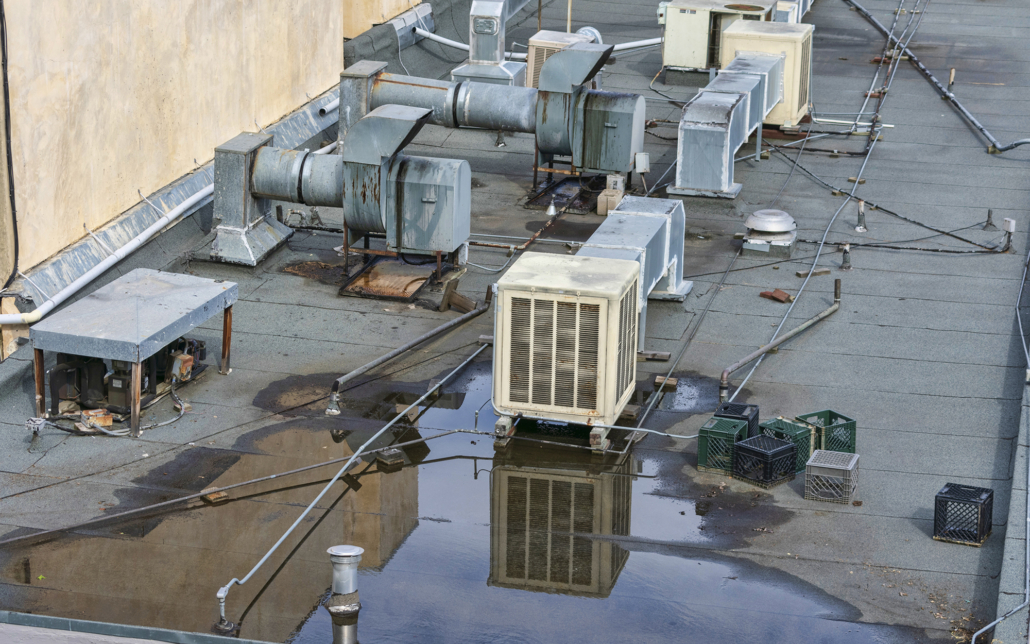
A commercial roof leak rarely announces itself with a neat drip directly under the problem. More often, you’ll see ceiling stains that appear days after a storm, damp insulation that spreads well beyond the entry point, or a “mystery” leak that comes and goes with wind direction and temperature swings.
The good news: most commercial roof leaks can be traced — and fixed — when you approach the problem methodically. The goal isn’t just to patch the visible symptom. It’s to identify the true entry point, understand why it’s leaking, and correct it in a way that reduces repeat issues and protects the rest of the roof system.
Below is a practical process facility teams and building owners can use to narrow down leak locations, communicate clearly with a roofing contractor, and avoid the most common (and expensive) missteps.
First, think like water (because water doesn’t play fair)
Water travels. It moves downhill, follows seams, rides along fasteners, clings to the underside of membranes, and can run horizontally on a deck or vapor barrier before it drops into the building. That’s why “the stain is here” often tells you only where the water ended up — not where it got in.
A strong leak investigation starts with two mindsets:
- Assume the entry point may be far from the interior symptom.
- Assume there may be more than one issue. (Aged flashings + clogged drains + minor puncture is a very normal combination.)
Step 1: Document the leak from the inside — before you go to the roof
Start indoors. Your interior evidence is the breadcrumb trail you’ll use to narrow your roof search.
What to record
- Exact location of staining or dripping (grid lines, bay numbers, suite, or room names)
- Photos (wide shot + close-up)
- Whether it’s a drip, stain, bubbling paint, wet insulation, or active running water
- Approximate size of the affected area (and if it’s growing)
- Any odor (musty smells can signal long-term moisture)
- Whether it appears after rain, snow/ice melt, HVAC operation, or high wind
Fast diagnostic clues
- Leak appears only during wind-driven rain: suspect perimeter flashings, parapet caps, wall transitions, or rooftop units.
- Leak appears days after rain: suspect saturated insulation holding water, then releasing slowly.
- Leak appears on dry, hot days: could be HVAC condensate, plumbing, or trapped moisture flashing as vapor (not always a roof leak).
Pro tip: If you can safely access the ceiling plenum, look above the stain for water trails on steel, deck flutes, conduits, or pipes. Water often leaves a shiny “wash path.”
Step 2: Check the obvious non-roof sources (it’s worth the five minutes)
Before you commit to a roof tear-up, rule out common “false roof leaks”:
- Condensate drain line clogs or disconnected HVAC drain lines
- Plumbing vent or drain leaks
- Sprinkler line issues
- Wet walls from leaking windows or façade joints
- Rooftop equipment leaks (coil pans, drain pans, humidifiers)
If the leak coincides with HVAC run cycles more than rain events, that’s a big clue.
Step 3: Map the suspect area on the roof
Once you have the interior location, translate it to the roof. This is where many investigations go sideways.
How to do it better
- Identify interior landmarks that correspond to roof features (parapet corners, stairwells, rooftop units, vents)
- Use building plans if available
- If you’re working with a contractor, ask for a roof plan markup with the interior leak area plotted
From there, expand your roof search to include:
- Higher elevations and slopes above the leak area
- Likely travel paths (deck flutes, structural low points)
- Penetrations, seams, and transitions within a reasonable radius
Step 4: Walk the roof — slowly — and look for the “usual suspects”
Most commercial roof leaks come from a handful of repeat offenders. During a roof walk, focus on these areas first.
1) Penetrations and flashings
Penetrations are the #1 risk zone on many roofs: pipes, drains, HVAC curbs, conduits, gas lines, and roof hatches.
Look for:
- Cracked or split pipe boots
- Loose termination bars
- Sealant that’s brittle, missing, or peeling
- Gaps at corners of curbs and equipment platforms
- Pitch pans that are cracked or underfilled
2) Seams and lap edges
On single-ply roofs, seams are critical. If a seam fails, water can migrate surprisingly far.
Look for:
- Wrinkled seams or “fishmouths”
- Open laps
- Contaminated or poorly adhered seam areas
- Mechanical damage from foot traffic along seam lines
3) Drains, scuppers, and ponding areas
Drainage problems don’t just cause leaks — they accelerate roof aging.
Look for:
- Clogged domes or strainers
- Debris lines indicating repeated ponding
- Stained membrane around drains (suggesting overflow or backflow)
- Deteriorated drain bowls or poorly sealed drain rings
4) Roof-to-wall transitions (parapets, rising walls, terminations)
Leaks often enter where the roof meets a wall — especially in wind-driven rain.
Look for:
- Deteriorated counterflashing
- Loose coping caps or joints
- Open reglet joints
- Cracks in masonry above roof level that allow water behind flashings
5) Rooftop traffic and “damage zones”
Anywhere humans regularly walk is a candidate:
- Paths to HVAC units
- Areas around service doors
- Near ladders and roof hatches
Look for punctures, scuffs, and compression damage.
Step 5: Don’t trust surface appearance — use diagnostic tools when needed
Some leaks are visible. Many are not. When the source isn’t obvious, the fastest way to avoid “guess and patch” is to use the right investigative methods.
Moisture probing and targeted test cuts
A skilled technician can use non-destructive probing, then make small, strategic cuts (when appropriate) to confirm wet insulation and migration direction.
Infrared (IR) moisture surveys
IR can help identify temperature differences that suggest wet insulation — typically best when conditions are right (dry weather before the scan, and a good day/night thermal swing).
Electronic leak detection
Depending on the roof type and conditions, electronic testing can pinpoint breaches in the membrane. This can be a big time-saver on large roofs with intermittent leaks.
Hose testing (carefully)
Controlled water testing can work, but it must be done in a disciplined way:
- Isolate small roof sections
- Allow time for water to travel
- Coordinate with someone inside to observe
Randomly flooding the roof often creates misleading results.
Step 6: Identify the cause, not just the opening
Once you find an entry point, ask: Why did it fail? Common root causes include:
- Aging or UV-degraded sealants and flashings
- Movement at curbs, parapets, and terminations
- Poor drainage leading to standing water stress
- Repeated foot traffic without protection pads or walk paths
- Past repairs that weren’t compatible with the roof membrane
- Improper details at original installation or later penetrations
When you solve the root cause, you reduce repeat service calls and protect your warranty position.
Step 7: Capture a “repair-ready” report (this prevents costly misunderstandings)
Whether you’re handing the issue to in-house maintenance, a property manager, or a roofing contractor, the more clearly you document the problem, the faster it gets solved.
Include:
- Interior photos + roof photos
- A simple roof plan markup of the leak area and suspected sources
- Notes about weather conditions when the leak occurred
- Any history of previous repairs in the area
- A list of rooftop units/penetrations near the suspect zone
A detailed inspection report with photos is one of the best ways to clarify scope and set expectations for cost and timeline.
Why “spot repairs” sometimes fail (even when they’re done well)
It’s not always because the contractor missed something. Commercial roofs often have multiple minor defects that only become active under certain conditions.
A few scenarios that commonly create repeat leaks:
- Water enters at one point, travels, and drops somewhere else — so the patch is “right” but not at the true entry.
- The membrane breach is only part of the issue; the real driver is ponding water or a failing termination detail nearby.
- Saturated insulation continues to release water, making it seem like the leak is still active even after repair.
That’s why a methodical investigation — and sometimes moisture mapping — matters.
When you should call a professional (and what to ask for)
If your leak is recurring, spreading, or tied to critical areas (electrical rooms, production floors, medical spaces, high-value inventory), it’s time to bring in a commercial roofing professional.
When you do, ask for:
- A documented inspection (photos + findings)
- A clear explanation of the suspected entry point(s)
- Options: short-term repair vs. long-term corrective work
- Recommendations that prioritize roof life extension where practical
If you’re evaluating contractors, industry guidance emphasizes checking for professionalism fundamentals — insurance, written proposals, references, and clear warranty terms.
A quick note on roof systems
Different commercial roof systems have different leak behaviors. (For example, single-ply seams behave differently than metal panel laps, and coatings behave differently than membranes.) A good contractor will tailor the investigation to the system you actually have — and to how your roof drains, moves, and gets accessed.
Need help finding the leak source?
Commonwealth Roofing Corp. provides in-depth commercial roof inspections and service support designed to locate issues, document findings clearly, and recommend the most sensible path forward — repair, corrective work, or proactive maintenance.
Safety, Service, & Quality — every day since 1981.
Louisville: (502) 459-2216
Hebron: (859) 943-0012
Service: (888) 818-4842