
How To Prevent Roof Damage During the Freeze-Thaw Cycle
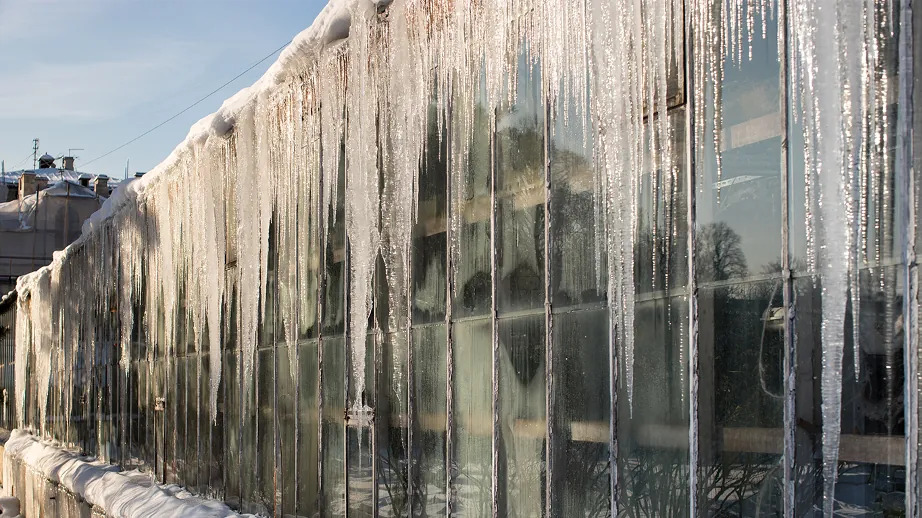
If you own or manage a building, winter doesn’t just bring cold weather—it brings freeze-thaw cycles. That back-and-forth swing above and below freezing is one of the most common (and most overlooked) causes of roof deterioration.
The tricky part is that freeze-thaw damage often starts small and quiet—a tiny opening at a seam, a hairline crack in a flashing detail, a little water that doesn’t drain quite right. Then winter does what winter does: water freezes, expands, and turns a “minor detail” into a leak, a saturated insulation problem, or a major repair.
Below, we’ll break down what the freeze-thaw process does to roof systems, the warning signs building owners should watch for, and how we at Commonwealth Roofing help you prevent small issues from becoming expensive emergencies.
What is the freeze-thaw cycle, and why is it so hard on roofs?
Freeze-thaw damage happens when:
- Water gets into a small opening (a seam edge, fastener hole, flashing joint, crack, or porous material).
- Temperatures drop below freezing and that water freezes and expands.
- The expansion pushes materials apart—widening gaps, lifting edges, stressing seams, or cracking brittle materials.
- Temperatures rise and the ice thaws, letting liquid water flow deeper into those newly enlarged openings.
- Repeat the cycle enough times, and the roof’s “watertight” details stop being watertight.
This is why buildings can appear fine all fall—and then suddenly develop leaks during winter warmups or early spring rains. The roof didn’t necessarily “fail overnight.” It was often fatigued by repeated cycles.
How freeze-thaw damages different parts of a roof system
Freeze-thaw stress doesn’t hit just one spot—it attacks the roof system as a whole. Here’s where we see it most often.
1) Seams and lap edges on low-slope (flat) roofing
On many commercial low-slope roofs, the “waterproofing” relies on seams, laps, and terminations staying tight and sealed. Freeze-thaw can:
- Work water into the tiniest seam irregularity
- Cause edge lift or seam separation
- Accelerate failure at transitions and tie-ins
If a roof also has ponding water, the risk increases—standing water is a ready-made supply for freeze-thaw cycling.
2) Flashings and penetrations (the #1 leak zone)
Most leaks aren’t in the middle of the field—they’re at:
- Pipes and vents
- HVAC curbs
- Skylights
- Roof-to-wall transitions
- Copings and parapet details
Why? Because those areas combine multiple materials and joints. Freeze-thaw can crack sealants, loosen termination bars, and open tiny pathways where water can migrate.
3) Metal roofs: fasteners, laps, and movement points
Metal expands and contracts significantly with temperature changes—so freeze-thaw season often overlaps with peak movement.
- Fasteners can back out over time
- Washers and gaskets can fatigue
- Laps can open or shift
- Sealant lines can split
Even if the metal panels look “fine,” the leak path is often at a fastener line or a detail that’s been moving for years.
4) Gutters, scuppers, drains, and downspouts (where small clogs become big problems)
Drainage problems are a freeze-thaw multiplier. When drains are slow or blocked:
- Water lingers longer on the roof
- Ice forms more easily
- The freeze-thaw cycle repeats more aggressively in the same areas
For low-slope roofs, poor drainage can also increase winter loading from ice and trapped water.
5) Insulation and moisture in the roof assembly
Once water gets into the system, freeze-thaw can create a chain reaction:
- Wet insulation loses thermal performance
- More heat escapes
- Snow and ice melt/refreeze faster
- Leaks expand and spread
- Trapped moisture can worsen over time
In short: the earlier you catch moisture intrusion, the less likely it becomes a widespread system issue.
What building owners should look for: freeze-thaw warning signs
Freeze-thaw damage is often visible—if you know where to look and what to document.
Interior warning signs (often the first clue)
- New or growing ceiling stains
- Drips or leaks during warmups after a freeze
- Peeling paint, bubbling drywall, or warped ceiling tiles
- Musty odors (possible hidden moisture)
Exterior/roof-surface warning signs
- Separated seams, lifted laps, or exposed edges (low-slope roofs)
- Cracked or failing sealant at penetrations and terminations
- Loose flashing metal, coping issues, or wall-transition gaps
- Blisters, ridges, or areas that feel “spongy” underfoot (a sign to call a pro—don’t keep walking it)
- On metal roofs: backed-out fasteners, missing washers, or rust at fastener lines
- On steep-slope roofs: cracked/broken shingles, damaged valleys, or compromised pipe boots
Drainage red flags (especially important in winter)
- Debris at drains/scuppers
- Ice forming repeatedly in the same low areas
- Evidence of ponding (staining or ring marks after thaw)
- Gutters pulling away or overflow marks
Important safety note: if conditions are icy or you don’t have safe roof access, don’t send staff onto the roof. A professional inspection is far cheaper than an injury.
How to reduce freeze-thaw risk before it becomes severe damage
Freeze-thaw is inevitable. Severe damage isn’t. Here are high-impact steps that help:
Keep water moving off the roof
- Clear drains/scuppers and remove debris
- Address areas of chronic ponding
- Repair drainage components before winter
Seal and reinforce the “details”
- Maintain sealants and flashings around penetrations
- Correct small membrane issues before they open up
- Ensure terminations are secure and watertight
Watch the “small” problems that grow fast
- Minor leaks
- Loose flashing
- Small punctures
- Backed-out fasteners
- Aging sealant
Freeze-thaw turns “small” into “expensive” quickly.
Have a plan, not just a reaction
Reactive repairs in January are rarely ideal. A documented, proactive plan gives you:
- Better budgeting
- Fewer emergency calls
- Longer roof life
How Commonwealth Roofing helps prevent freeze-thaw roof damage
At Commonwealth Roofing, the goal isn’t just to patch leaks—it’s to help building owners get the most from their roofing assets by identifying issues early and making informed decisions.
Here’s what that looks like in practice:
1) In-depth inspections with clear documentation
Freeze-thaw damage often hides in details. That’s why our inspections focus on the areas most likely to fail—penetrations, perimeters, transitions, drainage points, seams, and any known historical leak zones.
Commonwealth’s inspection approach emphasizes thoroughness and communication, including a detailed report with photos so you can understand the scope of issues and options.
2) Drone support for safer, clearer roof assessments
Some roofs are difficult or unsafe to access frequently—especially in winter. We use technology to improve visibility and documentation. Commonwealth Roofing notes that we’re licensed commercial drone operators and provide aerial reporting so customers can understand project progress and conditions.
3) Preventative maintenance to catch small issues early
Freeze-thaw damage is exactly the kind of problem preventative maintenance is built for: it’s usually cheaper to correct a seam issue or flashing weakness than to remediate widespread moisture intrusion after months of cycling.
Commonwealth offers a preventative maintenance solution designed to keep a close eye on the system so small issues can be caught before they become big problems.
4) Repairs and defect corrections to extend roof life
If the existing roof is still serviceable, we don’t jump straight to replacement. Commonwealth Roofing describes an approach of evaluating the roof, diagnosing issues/defects, and proposing defect corrections and a plan to extend roof life when appropriate.
For freeze-thaw concerns, that might include:
- Resealing or reinforcing critical flashings
- Targeted membrane repairs
- Fastener and detail corrections on metal systems
- Drainage improvements and water-management fixes
5) Roof replacement planning before failure
Sometimes the best freeze-thaw strategy is preventing the roof from reaching a brittle, end-of-life condition where cycling causes rapid breakdown.
Commonwealth’s services include repairing to extend life and replacing aging systems before they fail completely—both for commercial and residential clients.
And when replacement is needed, we help select the best system for performance, energy, safety, and budget requirements.
6) Experience across the systems most impacted by winter cycling
Different materials react differently to freeze-thaw. Commonwealth notes experience with common low-slope systems (including white reflective membranes like PVC and TPO, as well as EPDM and modified bitumen), along with other system types.
That matters because “the right fix” depends on your roof type, detailing, and condition—not a one-size-fits-all patch.
Don’t wait for a mid-winter leak to learn your roof’s weak points
Freeze-thaw damage is predictable—because the weather pattern is predictable. If you can identify the early signs and address them proactively, you can often prevent:
- Major interior damage
- Emergency repairs in harsh conditions
- Premature roof replacement
- Costly moisture intrusion into the assembly
If you’re seeing warning signs—or you simply want a seasonal roof check to get ahead of winter cycling—Commonwealth Roofing is here to help with in-depth inspections, documented reporting, repairs, and preventative maintenance designed to protect your building and your budget.