Can a roof coating restore my commercial roof instead of replacing it?
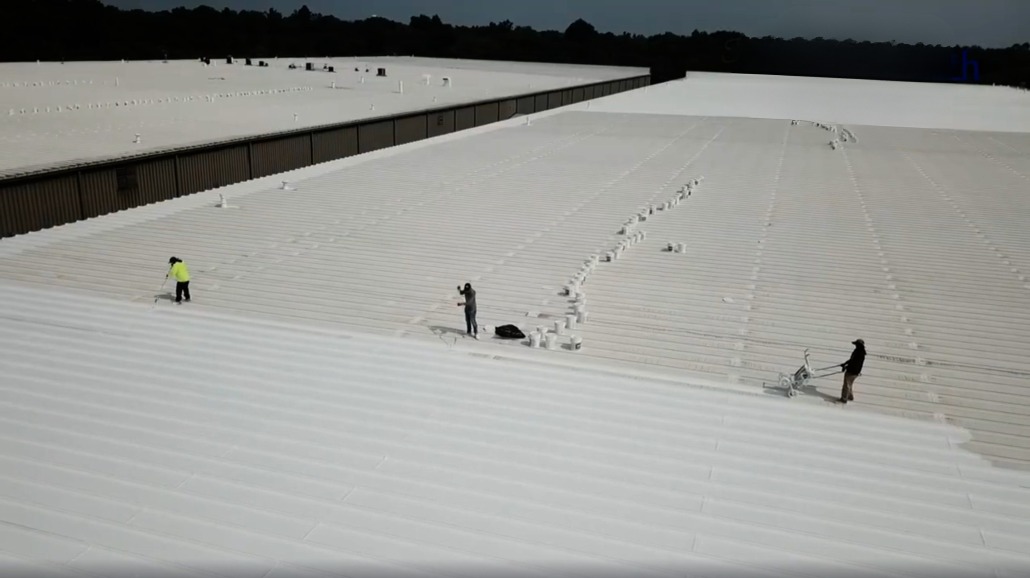
In many cases, yes — a roof coating can restore a commercial roof and help delay a full replacement.
But there is an important qualifier: the roof still has to be in good enough condition to restore. If the system is structurally sound and the problems are mostly surface-level, a coating may be a smart solution. If the roof is saturated, badly deteriorated, or failing in multiple areas, replacement is usually the better path.
That is why every coating decision should start with a professional inspection.
What a roof coating can do
A roof coating is a fluid-applied material installed over an existing commercial roof. When used in the right situation, it can help protect the roof from weather, UV exposure, and ongoing wear.
For many building owners, coatings are attractive because they can:
- extend the life of the current roof
- improve surface protection
- help delay the cost of full replacement
- reduce the disruption of a tear-off project
- improve reflectivity on some roof systems
A coating can be a strong restoration tool, but it is not a reset button. It does not make every old roof new again, and it does not solve serious structural problems underneath the surface.
When a coating may be a good option
A coating is often worth considering when the roof is aging but still fundamentally sound.
That may include roofs with:
- surface weathering
- UV-related aging
- minor, repairable leaks
- small seam issues
- localized flashing problems
- worn surfaces on metal or membrane systems
In these cases, the coating is usually part of a larger restoration process. The roof still needs to be cleaned, repaired, and properly prepared before the coating is installed.
For example, a metal roof with limited oxidation and exposed fasteners may still be restorable if damaged areas are repaired first. A single-ply roof with surface wear and isolated seam issues may also be a candidate, as long as moisture has not spread into the insulation or deck.
A good rule of thumb is simple: coatings work best on roofs that still have useful life left.
Why owners choose coating instead of replacement
For the right building, restoration can offer several meaningful advantages.
Lower upfront cost
A coating project is often less expensive than a full replacement because it usually avoids a complete tear-off. That can help owners extend the life of the current asset while postponing a much larger capital expense.
Less disruption
A full commercial roof replacement can be noisy, messy, and disruptive to normal operations. A coating project is often less invasive, which can be especially helpful for occupied buildings.
That may mean:
- less debris
- less interruption to tenants or staff
- less impact on daily operations
- a faster path to restoring performance
Added service life
A properly installed coating system can add years of life to an existing roof. That can make sense for owners who want more value from the current system or need time before committing to a full replacement.
Potential energy benefits
Some coating systems can improve reflectivity and help reduce rooftop heat absorption. While energy savings vary by building and climate, reflectivity can still be a valuable added benefit in some situations.
What a coating cannot fix
This is where many owners get into trouble.
A coating should not be used to cover up a roof that is already failing. If water is trapped in the system, if the insulation is wet, or if the deck or substrate is compromised, the roof needs more than a new surface layer.
A coating cannot solve problems such as:
- widespread trapped moisture
- wet insulation
- major structural damage
- deteriorated decking or substrate
- extensive seam failure
- severe flashing breakdown
- widespread leak damage
- a roof system that has reached the end of its service life
In other words, a coating is a restoration tool — not a shortcut around replacement.
Why inspection matters so much
The only way to know whether a coating is the right solution is through a thorough inspection.
A qualified commercial roofing contractor should evaluate:
- the overall condition of the roof
- seams and terminations
- flashings
- penetrations
- drainage
- signs of hidden moisture
- the condition of the membrane, metal panels, or substrate
- repair history and recurring trouble spots
In some cases, a moisture survey may also be needed.
That step matters because a roof can look acceptable from the outside while still hiding moisture or deterioration underneath. Installing a coating over those problems does not fix them — it only covers them.
How to think about coating vs. replacement
The best question is not, “Which option is cheaper today?”
The better question is, “Which option fits the real condition of the roof?”
A coating may be the better choice when:
- the roof is dry
- the roof is structurally sound
- the issues are limited and repairable
- the owner wants to extend service life
- a full tear-off is not yet necessary
Replacement may be the better choice when:
- the roof is saturated
- the system is failing in multiple areas
- the substrate is compromised
- major damage is already present
- repairs have become frequent and repetitive
- the roof has reached the end of its useful life
A sound roof can often be restored. A failing roof usually needs to be replaced.
So, can a roof coating restore your commercial roof?
Yes — in the right circumstances.
If your commercial roof is structurally sound, dry beneath the surface, and showing surface wear rather than full-system failure, a roof coating may be a smart restoration option. It can extend service life, improve protection, and help postpone a full replacement.
But if the roof has widespread moisture, major deterioration, or structural failure, a coating is not a true fix. In that case, replacement is usually the better long-term choice.
The key is getting an expert evaluation before making the call.
A roof coating can be an excellent restoration tool — but only when the roof underneath it is still worth restoring.
Safety, Service, & Quality — every day since 1981
Louisville: (502) 459-2216
Hebron: (859) 943-0012
Service: (888) 818-4842